

How iNetic Traction Bridges the Gap Between R&D and Production
The UK electric motor and drivetrain specialist that gets customers from initial conversation to vehicle on the road, in eight months
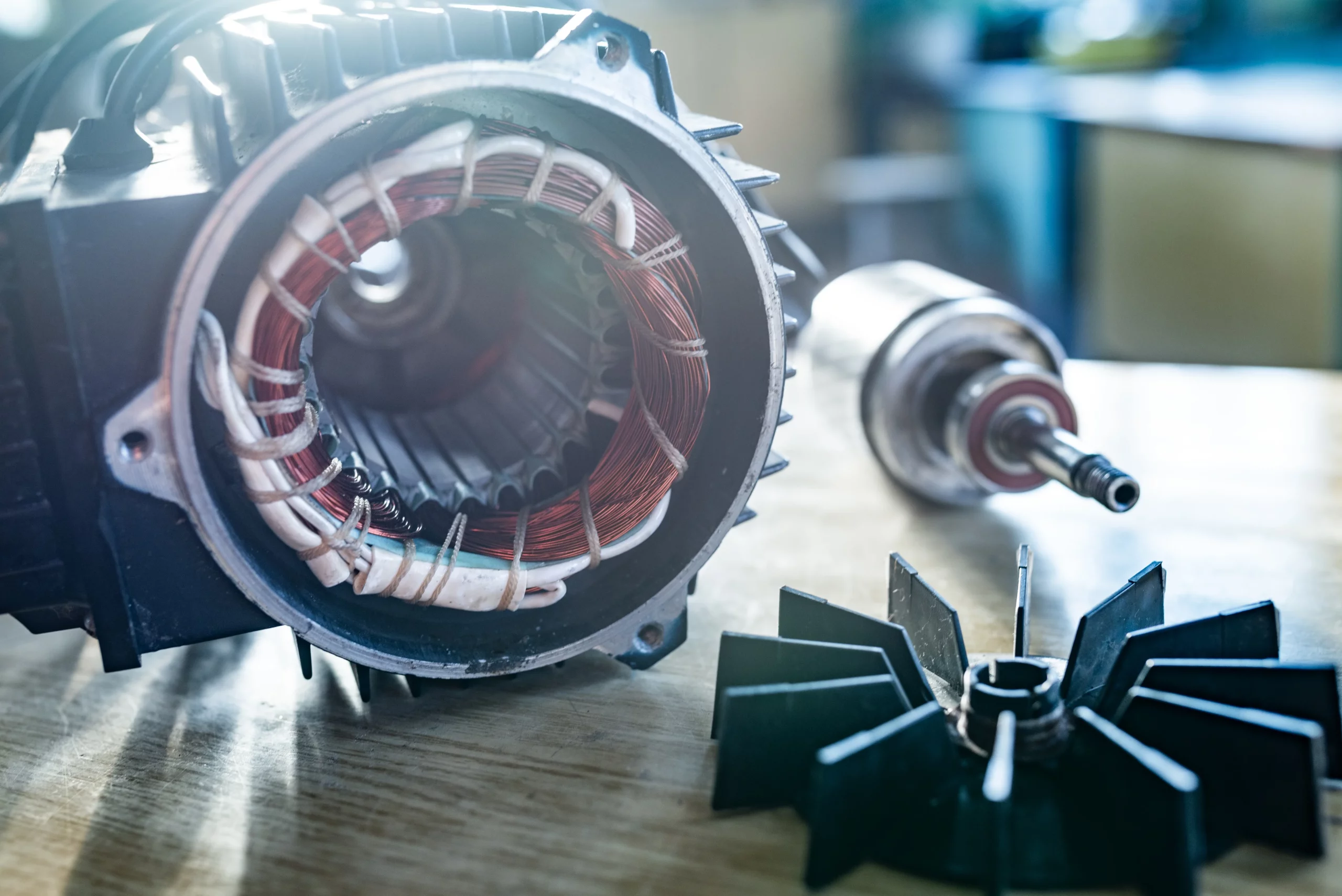
In the reception of iNetic’s facility sits a gold-plated stator; the 100,000th produced for a single customer. It is a small object, but it tells you everything about where this company came from. What it does not tell you is where it is going: into the heart of some of the most demanding electric drivetrain development programmes in the world, across sectors from marine to defence, off-highway to automotive. We sat down with Red Blaylock, iNetic’s Traction lead, to find out how a UK electric motor manufacturer with roots in high-volume production has become one of the country’s most versatile engineering partners for the electrification era and why the secret is not the technology, but the way design, manufacturing and test are brought together under one roof.

Where iNetic came from and what changed
Founded in 1997, iNetic began as a high-volume electric motor manufacturing operation. The gold-plated stator in reception is not a piece of decorative irony; it is a genuine milestone marker, a symbol of the precision and discipline that underpins everything the company does. But the business has evolved considerably since those early days.
“iNetic is a manufacturing company at heart,” Red Blaylock explains. “But design is absolutely fundamental to our work now, especially when designing for niche applications where an off-the-shelf motor simply would not be suitable. The ability to combine manufacturing, test, and design is where the real magic happens.”
That combination; design, manufacturing and test integrated rather than siloed, is the thread that runs through everything iNetic does. To understand why it matters, it helps to understand what happens when that integration is absent.
The problem the industry keeps ignoring
There is a familiar and costly pattern in complex engineering programmes: design, manufacture, problem, redesign. It is a loop that wastes time, adds cost, and almost always forces compromise. What is perhaps surprising, as Red Blaylock points out, is that this problem is not the preserve of smaller organisations without resources.
“I can think of examples with large OEMs where this has been the case,” Red says. “The design team may spend a year optimising around the topology of the design, only to hand off to the manufacturing team and be told it cannot be made. The project is then delayed as they seek solutions, often leading to a delayed and compromised design that the manufacturing team still struggles to manufacture and nobody is happy.”
“The design team may spend a year optimising a topology, only to hand off to manufacturing and be told it cannot be made.”
The customers who immediately recognise the value of iNetic’s integrated approach, Red notes, are typically those who have already been through that loop. Experience is a hard teacher. The antidote, as iNetic practises it, is to collapse that loop entirely, evaluating manufacturing implications in parallel with design decisions from the outset, rather than sequentially. The result is not just faster electric vehicle development, but better outcomes: fewer compromises, fewer late-stage surprises, and products that the manufacturing team can actually produce at scale.
Eight months from conversation to vehicle on the road
The proof, as ever, is in the numbers. When asked for a concrete example of what the integrated electric motor design and manufacturing model can deliver, the answer is striking.
“One customer we worked with recently contacted us right at the start of their project,” Red Blaylock explains. “This led them to go from initial conversation to car on the road in eight months.”
Eight months. In a sector where EV powertrain development programmes routinely take years and cost tens of millions of pounds, that is a significant claim. The ingredients, Red is quick to note, were not only iNetic’s process. “It was a good combination of our approach to manufacturing and design and the customer’s willingness to be transparent and have an open dialogue.”
That transparency, it turns out, is not as common as one might hope and it points to one of the subtler ways that engineering programmes go wrong.
System thinking, not component optimisation
One of the more common failure modes iNetic encounters is customers who arrive with a tightly scoped brief, optimise this motor, without revealing the broader system context. The instinct is understandable. Electric motors are what iNetic makes. But the consequences of that narrow framing can be significant.
“Some customers may come to us and ask specifically about the motor,” Red Blaylock explains. “We can optimise that motor to the nth degree but if we do not have the full system understanding, that system may not be the best system and may lead to compromises elsewhere, on the battery for example. At iNetic we pride ourselves on system understanding.”
“We can optimise that motor to the nth degree, but without full system understanding, the system may not be the best system.”
This is a broader point about how electrification projects succeed or fail. The electric drivetrain is not a collection of discrete components to be specified and procured independently. It is a tightly coupled system in which decisions about the motor affect the inverter, the battery, the thermal management, the control architecture. Optimising any one element in isolation risks suboptimising the whole.
iNetic’s flexibility in how it engages from requirements definition all the way through to production ramp means it can enter electric vehicle development programmes at any stage. But the earlier it is involved, the more impact it can have.
20mm to 1.5 metres
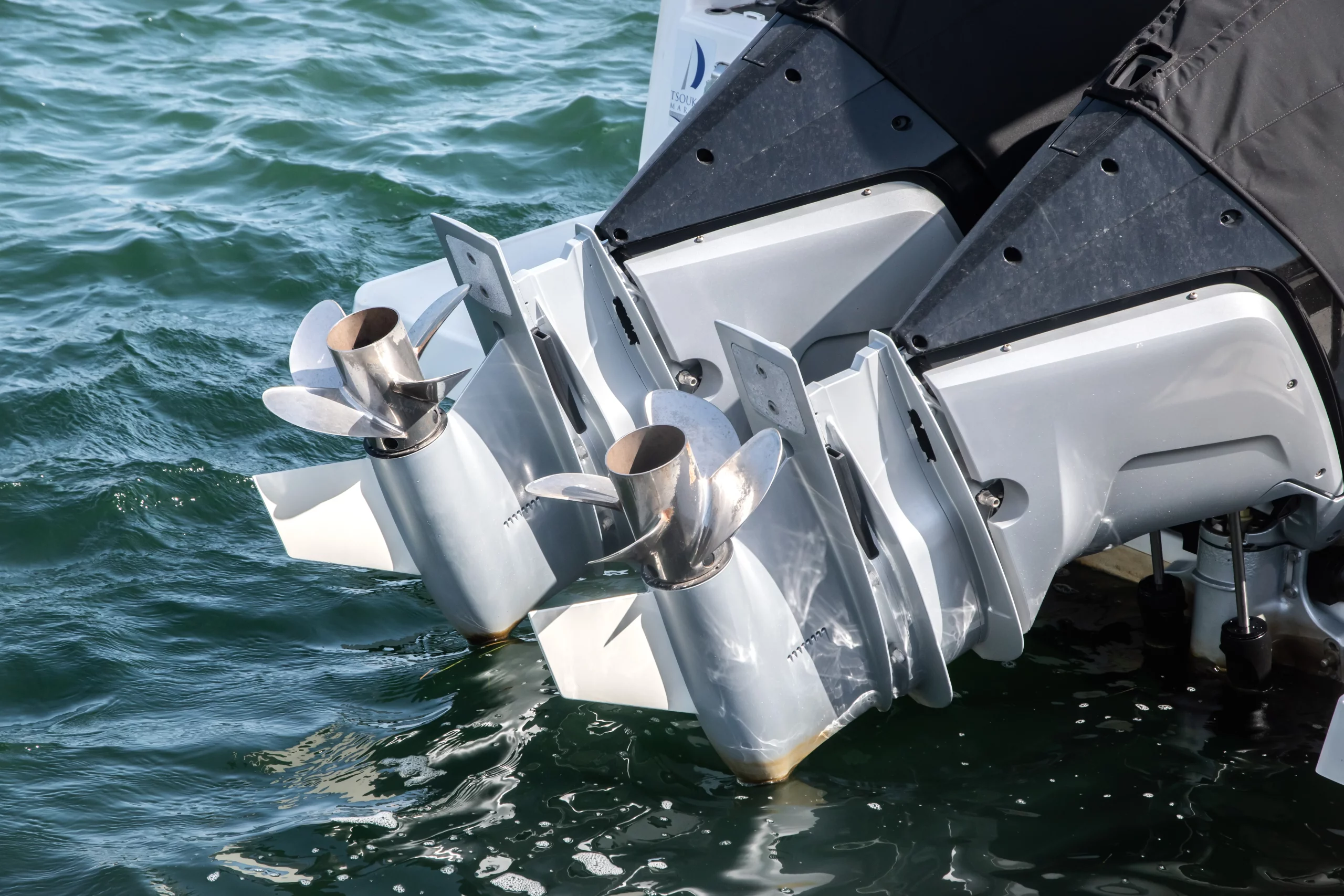
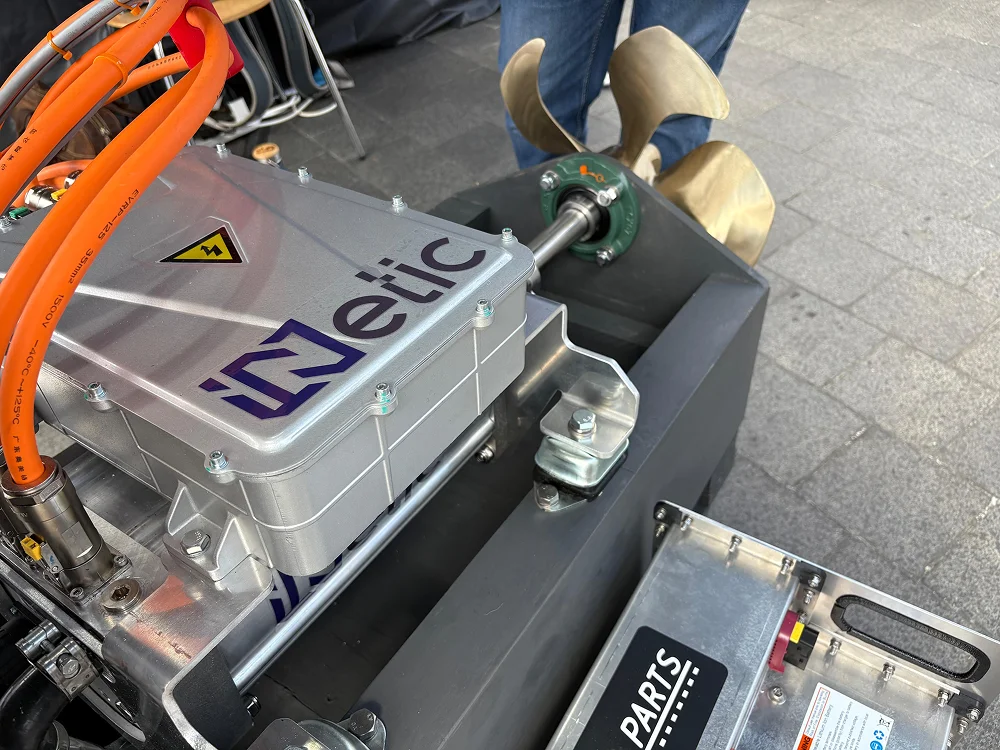
Part of what makes iNetic’s engineering judgement credible across such a range of electric drivetrain applications is the sheer breadth of the programmes it has worked on. The company has manufactured electric motors as small as 20mm in diameter for heart assistance devices, and as large as 1.5 metres in diameter for marine propulsion. Few organisations operating in the UK electric motor design space can claim that range.
The value of that breadth goes beyond scale. Lessons learned in one sector, the high-temperature capability developed for oil and gas applications, or the structural robustness required for marine electric motors, migrate across to other markets. It is a form of applied knowledge transfer that an organisation focused on a single vertical simply cannot replicate.
The sectors iNetic serves today reflect the full arc of industrial electrification: automotive, marine, robotics, off-highway, defence, and beyond. Each brings different duty cycles, different environmental challenges, different commercial constraints. Together, they make iNetic’s engineering team unusually well-rounded.

Punching above its weight
The broader context for iNetic’s work is one of intense global competition in the electrification space. China has scale. Germany has established Tier 1 suppliers. The United States has capital. Where does the UK electric motor and drivetrain industry fit?
“I think the UK has always punched above its weight, especially with electric motors and drives,” Red Blaylock says. “The issue for the UK has always been scaling.”
Red goes on to note encouragement at recent government initiatives, the APC’s Drive 35 programme among them, but has a specific ask for policymakers. “What I would like to see more of is simplification and clarity. That would help SMEs like us to know where to go to get support and what support we can get.”
It is a measured, constructive critique. Not a demand for subsidy, but a request for legibility. The machinery of industrial support exists; the problem is navigating it. For companies like iNetic, technically sophisticated, commercially agile, operating across multiple high-value sectors, that clarity could be the difference between scaling in the UK and scaling elsewhere.
What a career at an electric motor SME actually looks like
The conversation ends on a personal note that speaks directly to the next generation of engineers considering their options. Red Blaylock faced the exact career decision many will recognise: a large multinational OEM on one side, an engineering SME specialising in electric motor design and drivetrain integration on the other. Red chose iNetic.
“It was one of the best decisions I have ever made,” Red says. “Working in a smaller company, you have so much exposure to different aspects of the business, from design to project management to the more commercial side. From this you can see what you most enjoy and really drive your career in that direction, taking on responsibility sooner and learning much more quickly.”
For young engineers weighing up that choice, it is a compelling argument. The large OEM offers structure, prestige, and the comfort of a well-worn career path. The electric motor SME offers something different, a sometimes harder path, but one with breadth, ownership, and pace.
And, if the gold-plated stator in reception is anything to go by, the occasional milestone worth commemorating.
iNetic Traction Ltd is a UK electric motor manufacturer and drivetrain integration specialist, serving automotive, marine, off-highway, robotics and defence sectors. Learn more at inetic.co.uk.
